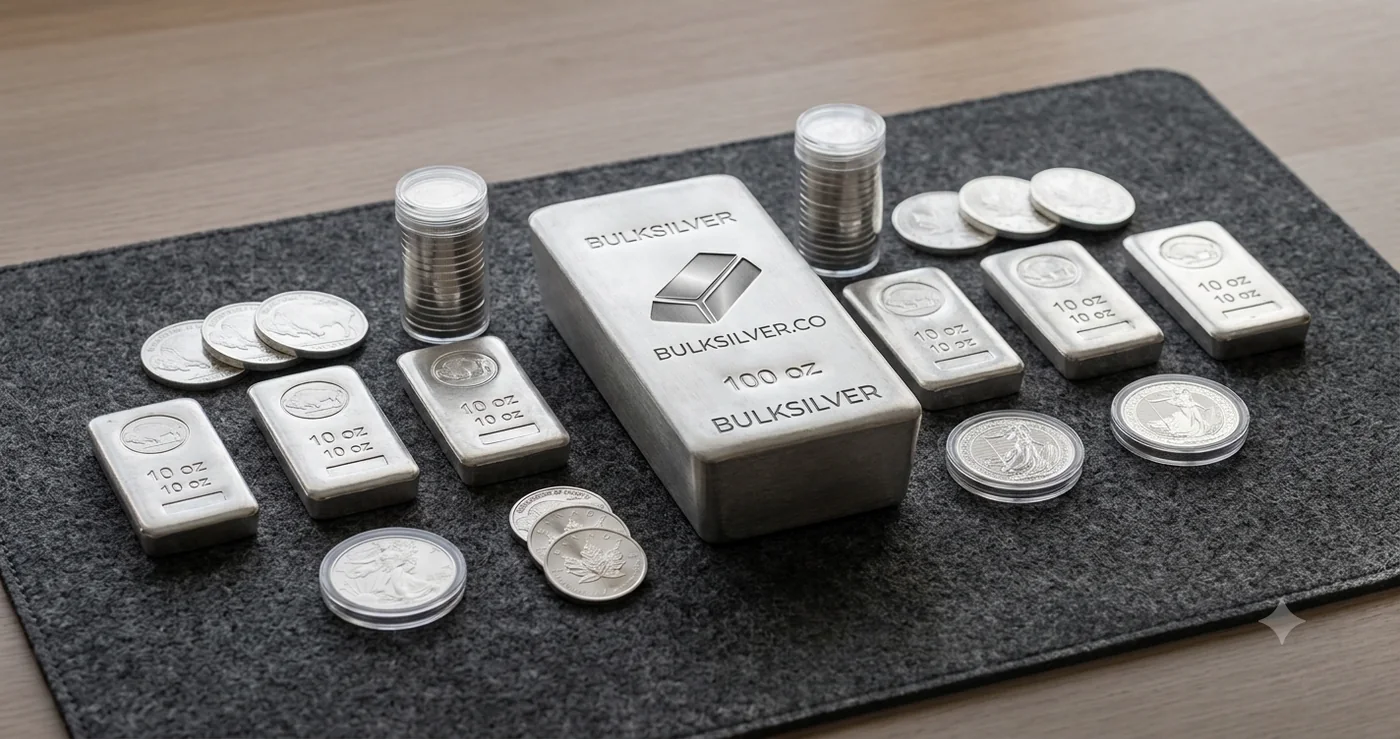
Buying silver in bulk starts with a unit decision, not a dealer logo. Decide how many fine-silver ounces you want, how divisible the position should be and where the physical weight will live.
1. Set an ounce target and a maximum checkout total
Use a dollar ceiling and an ounce range. Silver prices can move while you are comparing products. A clear maximum prevents a quantity discount from turning into an unplanned oversized purchase.
2. Choose a format mix
Large bars generally optimize cost. Ten-ounce bars balance cost and resale flexibility. Rounds create divisible one-ounce units. Sovereign coins add recognition at a premium. Constitutional silver provides small historical units with a different premium cycle.
3. Compare delivered cost
Record the spot reference, product quantity, payment method, shipping and any state tax treatment. Calculate delivered cost per fine-silver ounce. Repeat the calculation for each dealer at roughly the same moment.
4. Plan receipt and storage
Bulk silver is heavy and delivery timing matters. Use a secure receiving location, avoid packages sitting unattended and move the metal into its intended storage system promptly.
5. Keep an exit route
Before buying, identify likely local and online resale channels. A product that is cheap to buy but difficult to verify or sell can create a false economy.
Check current dealer inventory
Use multiple shelves. The lowest displayed unit price is not always the lowest delivered price.
Affiliate links may earn us a commission. Inventory, premiums, minimums and shipping terms change; confirm the final checkout total with the dealer.
Bullion is volatile, can trade below your purchase price, produces no income and creates storage, insurance and resale responsibilities. This page is educational and does not recommend a personal allocation.