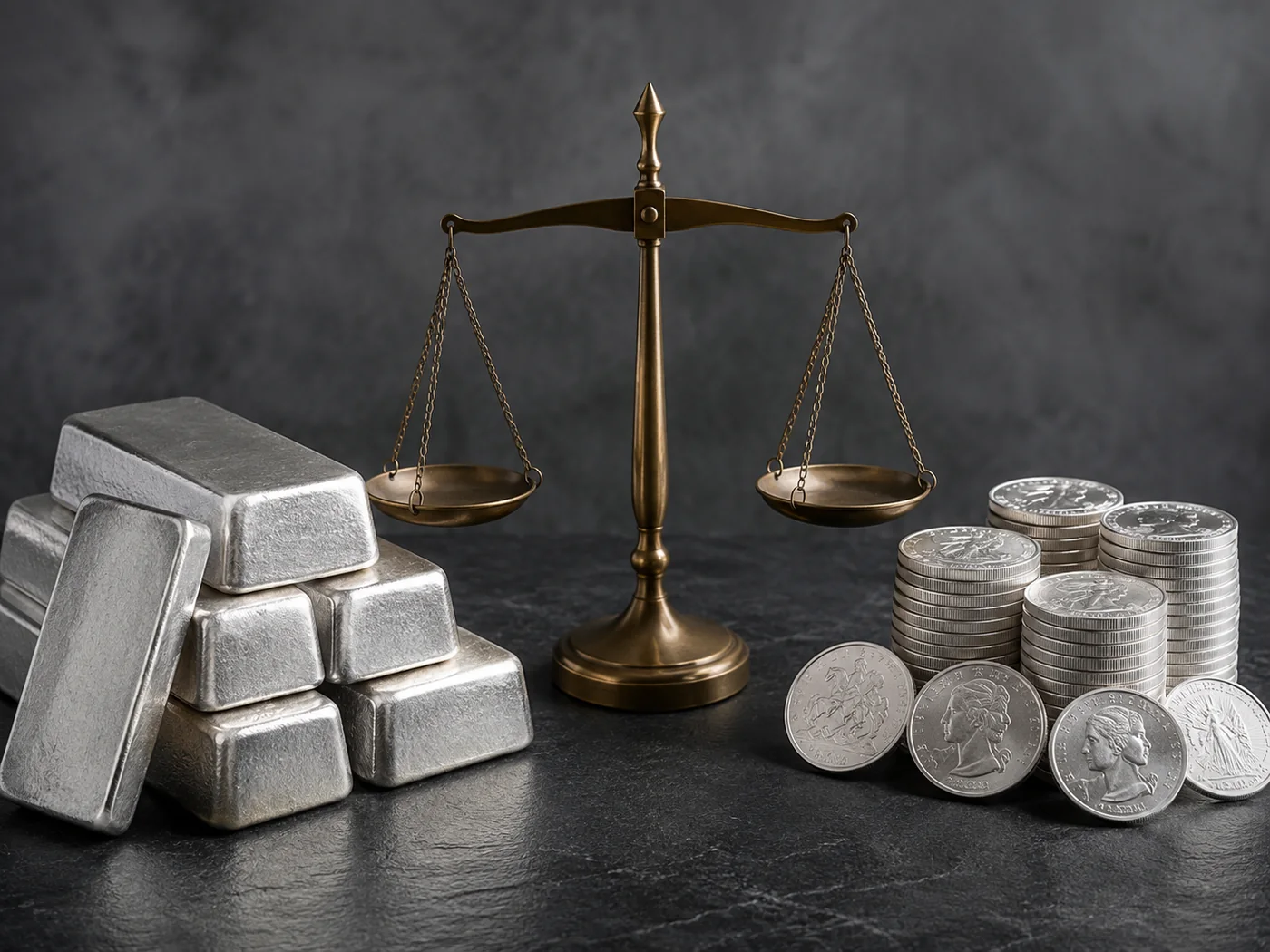
Bars and coins can contain the same fine-silver weight while serving different practical jobs. Bars usually emphasize ounces per dollar. Coins emphasize recognition, standardization and national-mint identity.
Premium efficiency
Large bars generally carry lower fabrication costs per ounce. Sovereign coins include minting, distribution and branding costs. During retail shortages, coin premiums can expand dramatically.
Divisibility and resale
One-ounce coins can be sold individually. A 100 ounce bar cannot. Ten-ounce bars provide an intermediate option. Resale flexibility matters most when a buyer expects to liquidate gradually.
Recognition and verification
A well-known sovereign coin may be recognized immediately. Bars depend more heavily on refiner brand, dimensions and testing. Large bars can warrant additional verification because the value concentrated in one object is higher.
A mixed approach
Many owners combine large bars for cost efficiency with one-ounce coins or rounds for flexibility. A mix is not automatically superior, but it can avoid relying entirely on one resale increment.
Check current dealer inventory
Use multiple shelves. The lowest displayed unit price is not always the lowest delivered price.
Affiliate links may earn us a commission. Inventory, premiums, minimums and shipping terms change; confirm the final checkout total with the dealer.
Bullion is volatile, can trade below your purchase price, produces no income and creates storage, insurance and resale responsibilities. This page is educational and does not recommend a personal allocation.