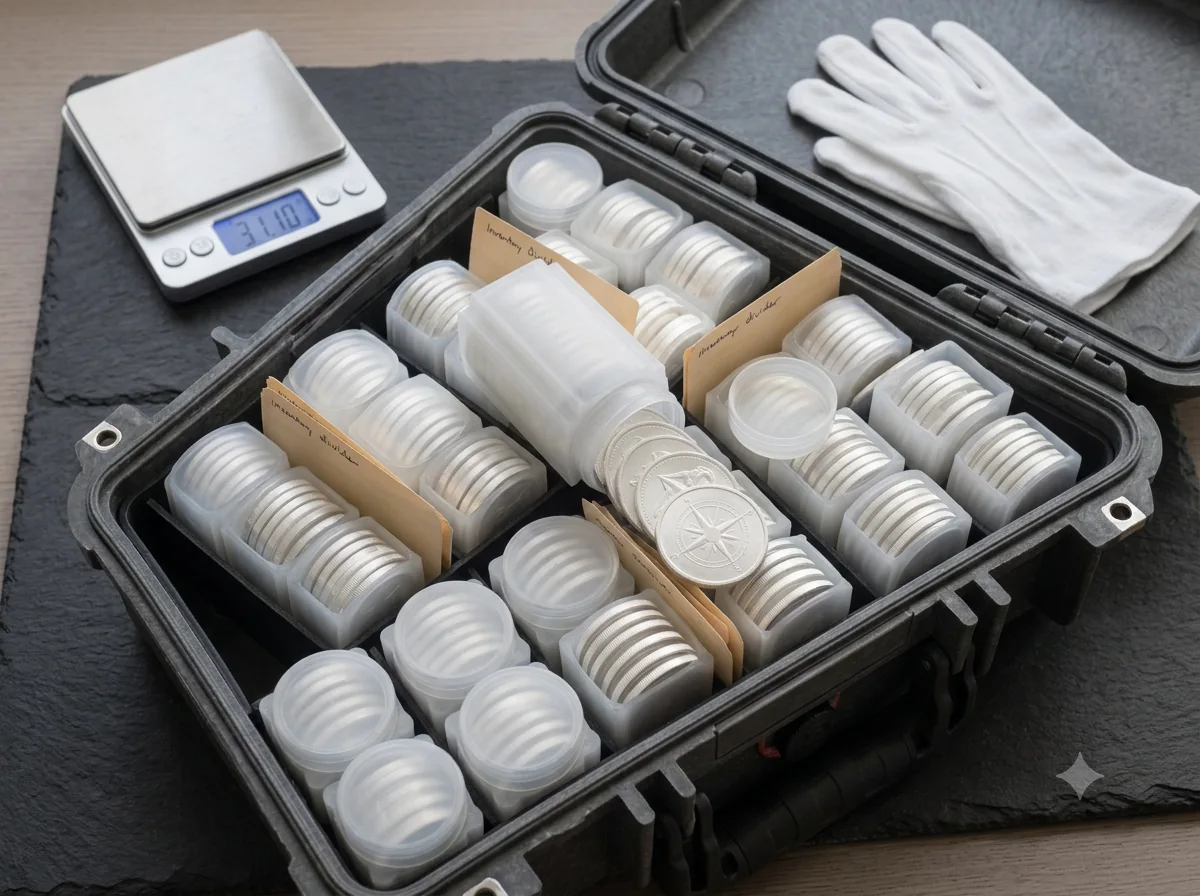
A silver round looks like a coin but is produced by a private mint and has no government face value. For many buyers, that is a feature: one-ounce convenience without the full sovereign-coin premium.
Rounds are not government coins
Rounds are private-mint products. Their value is primarily metal content plus whatever confidence the market places in the mint and design. They can be extremely liquid when produced by familiar private mints, but they do not carry legal-tender status.
Tubes make counting easy
Most one-ounce rounds are packaged in tubes. A tube keeps edges protected, simplifies inventory and makes a convenient resale lot. Full boxes can hold many tubes, creating a bulk position made of small, divisible units.
Generic versus collectible designs
Basic rounds are normally purchased for low premiums. Limited designs, colorization or licensed themes can move into collectible pricing. That can be fun, but a future bullion buyer may not reimburse the original premium.
The liquidity tradeoff
Rounds can be easier to sell one at a time than bars, but sovereign coins may be recognized faster by the general public. The best choice depends on whether likely resale is to a dealer, a local collector or another private stacker.
Check current dealer inventory
Use multiple shelves. The lowest displayed unit price is not always the lowest delivered price.
Affiliate links may earn us a commission. Inventory, premiums, minimums and shipping terms change; confirm the final checkout total with the dealer.
Bullion is volatile, can trade below your purchase price, produces no income and creates storage, insurance and resale responsibilities. This page is educational and does not recommend a personal allocation.