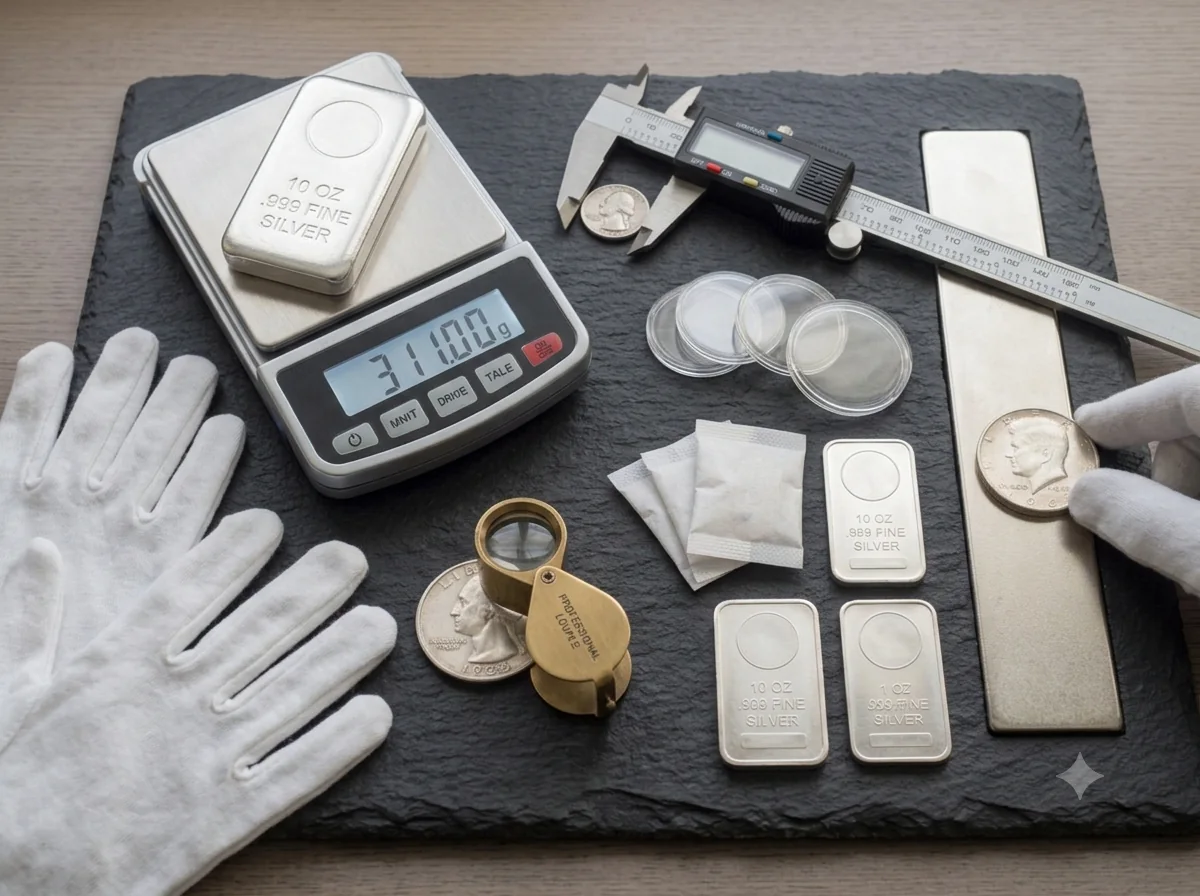
No single home test proves authenticity in every case. Good verification combines seller reputation, known specifications and multiple non-destructive checks.
Weight and dimensions
Use a calibrated scale and caliper to compare a coin or bar with published specifications. Counterfeit pieces can match one measurement while failing another.
Visual inspection
Look for correct relief, edge details, typography and finish. Compare with official mint images. Artificially soft or misshapen details can be warning signs.
Magnetic behavior and sound
Silver is not magnetic and exhibits distinctive conductive behavior. Magnet-slide and acoustic tests can be useful screening tools, but they are not universal proof.
Professional instruments
Dealers may use electrical conductivity, ultrasound or X-ray fluorescence equipment. Large bars and high-value lots justify professional verification when provenance is uncertain.
Bullion is volatile, can trade below your purchase price, produces no income and creates storage, insurance and resale responsibilities. This page is educational and does not recommend a personal allocation.